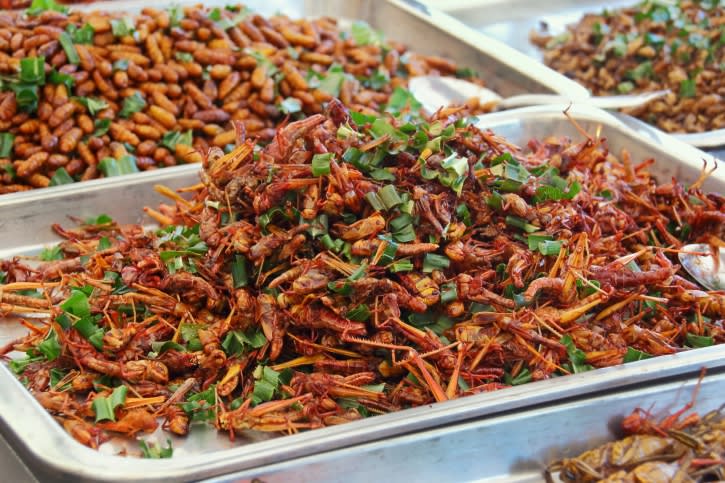
Edible insects are a well – admire food source in many regions of Africa,Asia and the America.Globally over 2,000 species are know to be edible and consumed by approximately 2 billion people.
Insect consumption is usually promoted for 3 major reasons
- Nutrition value
- Environment benefits
- Live-hood improvement (social & economical factors)
The demand for affordable, alternative and sustainable protein sources is surging globally due to the increase in the world’s population, which is projected to reach 9 billion by 2050.
Food & Agriculture Organization (FAO) of the United Nations proposed a global initiative to increase use of insects as food and feed to ensure future food security.
Risks Associated with insects as a food ingredient
Insects may contain biological agents and substances that can cause a health threat to consumer. European food safety authority has stated that the risks highly depended on the;
- Species of insect
- The feed they consume
- Environment they inhabit
- The production & processing methods
This makes it difficult to control the hazards engaging with the food that the insects consume in the wild. Due to this risk EU countries practice to farm insects in controlled environment with sanitary techniques.
Microbial Hazards
Insects may be infected with pathogenic microorganisms such as bacteria,viruses,fungi and protozoa.
As per the specific studies on the microbiology safety of insects;
- In West Africa, pathogenic bacteria including staphylococcus aureus,Pseudomonas aeruginosa and Bacillus cereus that may pose risk to the health have been reported in association with Oryctes monoceros and Oryctes owariensis.
- Wild harvested raw grass hoppers (Ruspolia differens) form Eastern Africa were found to be highly contaminated by Enterobacteriaceae, lactic acid bacteria, yeast & molds and bacteria endospores.
Chemical Hazards
Insects- derived food and feed products may contain hazardous chemicals such as environmental contaminants like heavy metals, organochlorines such as dioxins, mycotoxins and plant toxins.
Concentration of heavy metals in insects depend on the;
- Characteristics of the element
- Concentration in the substrate
- The insects species
- Their growth stage
A study on dried grasshoppers, that found the high lead content and the dehydration increased lead concentration, while yellow meal worm and black soldier fly larvae showed that the insects accumulate cadmium, lead and arsenic.
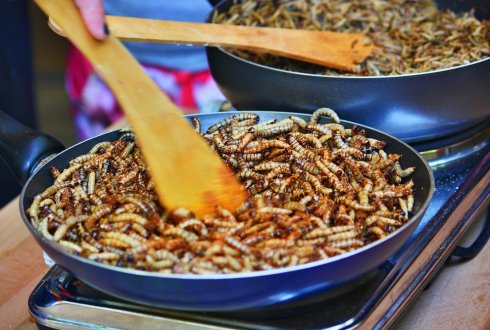
How to reduce risk by processing methods
Processing of edible insects can help lower the microbial load and the chemical hazards present in the insects. The processing methods can be applied solely or in combination.
Studies reported that either deep fried, smoked or toasted, Enterobacteriacea and lactic acid bacteria were completely eliminated while endospores were not.
In addition studies reflect that;
- Combination of wet heating and dry heating helped lower E.coli and S.aureus.
- Drying or acidification were controlling Enterobacteriaceae and bacterial endospores.
- Blanching followed by either chilled storage or industrial microwave drying is considerably affect the log reduction of microbial count.
When considering on the microbial load and nutritive value with a focus on protein digestibility and fatty acids composition, studies showed that boiling and cooking under vacuum were the most efficient techniques to reduce microbial load while maintaining the high levels of protein & polyunsaturated fatty acids of meal worms.
Drying processing of insects,toxin substances or process contamination such as hetero-cyclic aromatic amines, acrylamide and furans can be formed be chemical reactions between the insects and other ingredients.
In addition to a thermal treatments, appropriate storage methods are important.
However this subject are requires further research.
References – “An industrial innovation or a food safety concern?”,by John N.Kinyuru, RNutr and Jeremiah Ng’ang’a.
 Food Desk