
Basically Food safety management system is consists with three parts which are;
- Food Safety – Mitigation of unintentional/ accidental adulteration ; Science based
- Food defense – Mitigation of intentional adulteration ; Ideologically motivated
- Food fraud – Mitigation of intentional adulteration ; Economically motivated
The two main types of economically-motivated adulteration are:
• Sale of food which is unfit and potentially harmful, such as:
– Recycling of animal by-products back into the food chain;
– Packing and selling of meat with unknown origin;
– Knowingly selling goods past their ‘use by’ date.
• Deliberate mislabelling of food, such as:
– Products substituted with a cheaper alternative, e. g. farmed salmon sold as wild, or Basmati rice adulterated with cheaper varieties;
– False statements about the source of ingredients, i.e. their geographic, plant or animal origin.
A general approach to prevent food fraud can be summarised as follows:
1.Conduct vulnerability assessment, including:
– Know your materials and risks (history, economic factors, geographical origins, physical state, emerging issues);
– Know your suppliers (manufacturer, broker, history);
– Know your supply chain (length, complexity, supply & demand arrangements, ease of access);
– Know your existing control measures.
2. Design mitigation strategy and implement mitigation measures.
3. Validate and verify mitigation measures, continually review food fraud management system.
1. Conduct vulnerability assessment
- The organization should document, establish and maintain a documented procedure for food fraud vulnerability assessment.
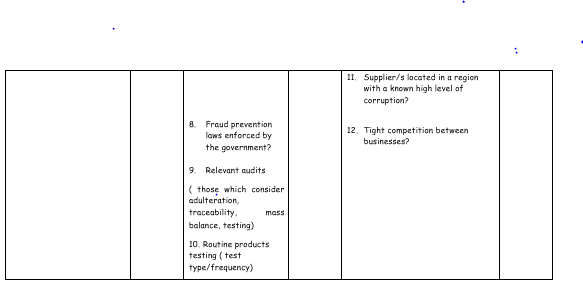
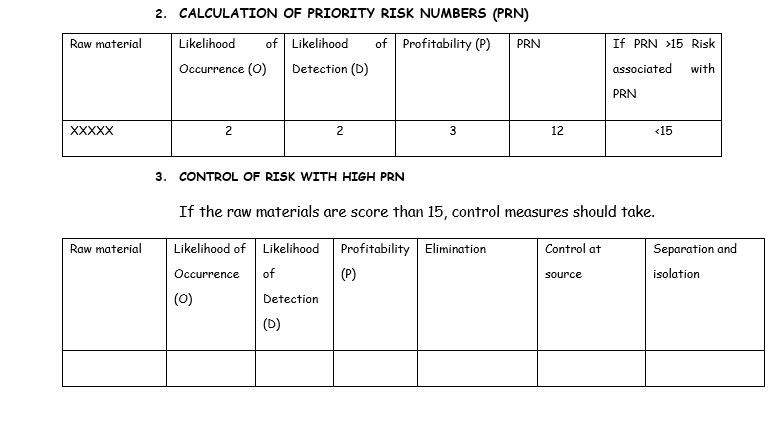
- Identification of possible vulnerabilities are based on likelihood of occurrence (O), Likelihood of detection (D) and Profitability (P) and therefore all information related to raw materials are categorized under them.
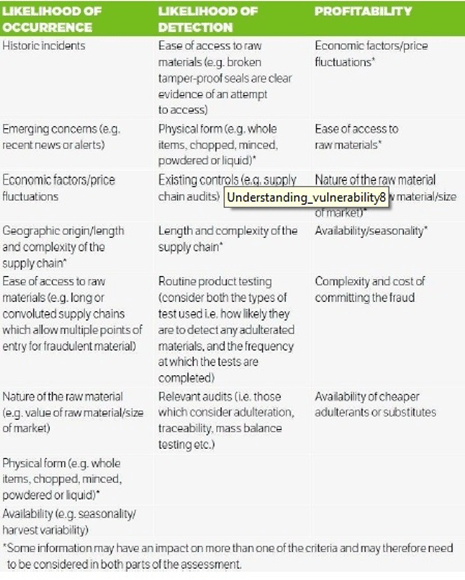
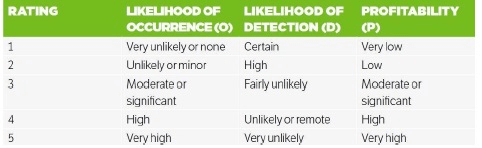
- Assessment of vulnerabilities are based on PRN score
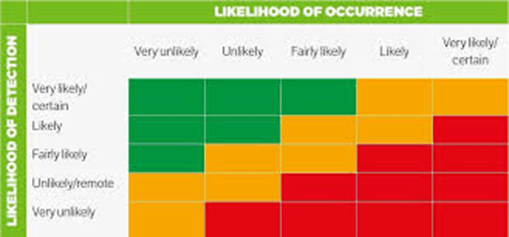
Red – High profile raw material(s) with a genuine and current possibility of adulteration or substitution. If rigorous controls are not already in operation, then urgent additional work is needed to ensure their integrity and to confirm that only genuine materials are purchased.
Amber – The raw materials may provide an attractive target for adulteration or substitution. The site will need to ensure that all identified risks are managed or monitored.
Green – Materials are unlikely to be a target for adulteration or substitution based on the current information. Reassessment should be completed if new information becomes available.
2.Design mitigation strategy and implement mitigation measures
If the raw material falls on red or amber range preventive measures should be taken strictly while product falling on green range must be monitored and reassessment should be done if new information becomes available.
Depending on the perceived risk and precise details of the supply chain, assurance controls may include;
- Certificate of analysis from raw material suppliers that prescribed tests to demonstrate authenticity of the material.
- Raw material testing. Depending on the assessed risk, this could include positive release testing or periodic verification testing.
- ELISA and DNA testing (in conformation of species/varieties)
- Isotopic profiling (to identify geographic or botanic origin)
- Testing against legislative definitions
- Supply chain audits that include potential for fraud, adulteration, traceability and mass balance tests.
- Mass balance in critical points in supply chain.
3. Validate and verify mitigation measures, continually review food fraud management system.
System must be reviewed annually as well as in case of actual or potential failure of a preventive measure.
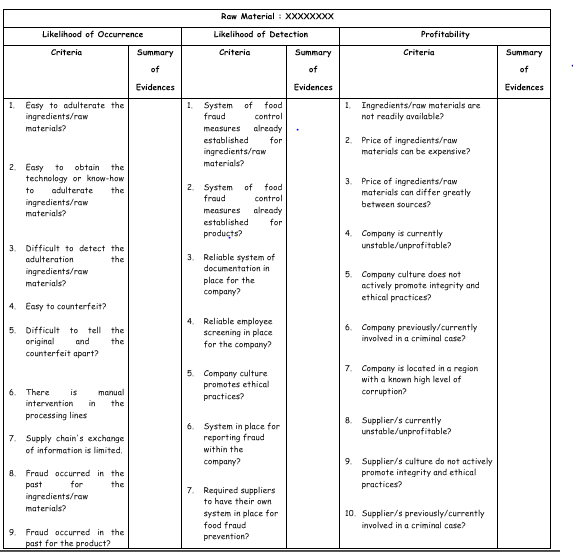
VACCP Template

 Food Desk