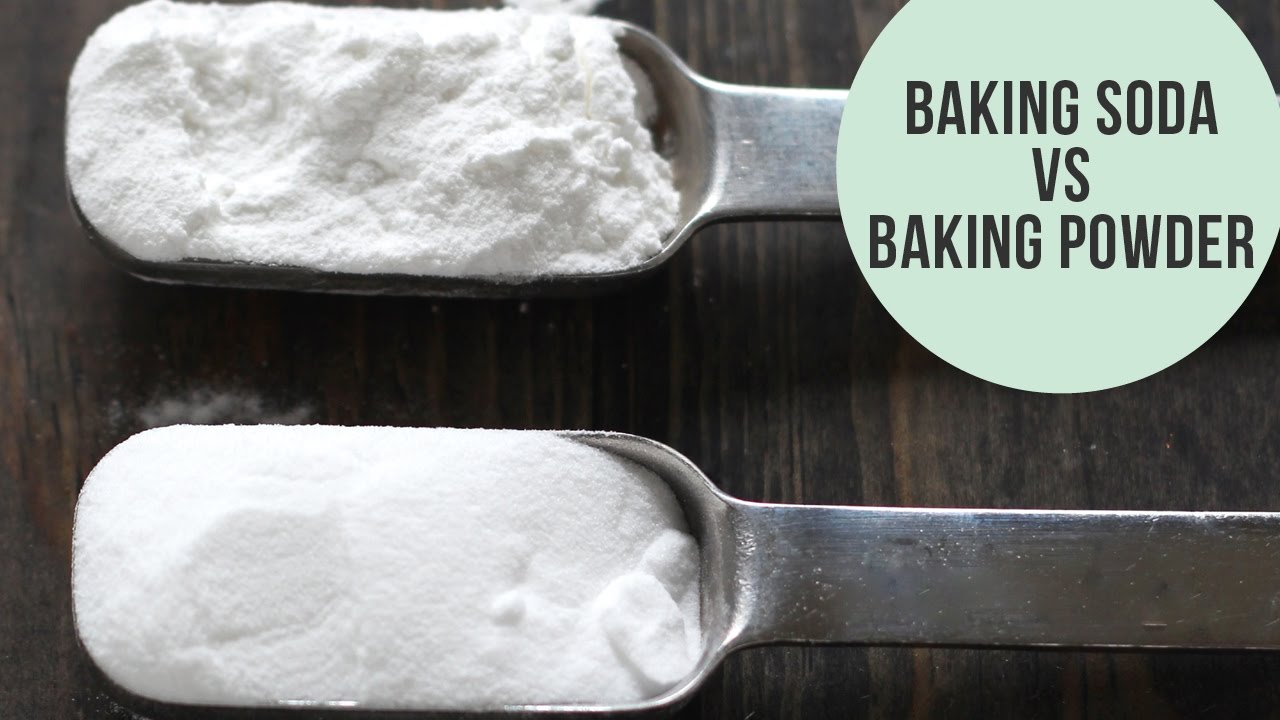
Baking soda, bicarb soda and baking powder are all leaving agents used in baking, but they are chemically different.
Baking soda and bicarbonate of soda are different names for the same thing. In countries like Australia, they mostly refer to it as bicarbonate of soda, but, especially in America, it is referred to as baking soda.
Baking soda is a pure leavening agent: sodium bicarbonate (NaHCO3). Sodium bicarbonate is a base- it’s alkaline. So if we encounter a baking recipe that uses baking soda, often that recipe will have an acidic element as well, such as vinegar, lemon juice, buttermilk, molasses, or yogurt. When baking soda is combined with moisture and an acidic ingredient (e.g., yogurt, chocolate, buttermilk, honey), the resulting chemical reaction produces bubbles of carbon dioxide that expand under oven temperatures. The carbon dioxide gas filters through the dough, searching for any pre-existing pockets of air. When it finds one, the carbon dioxide gas expands the pocket, causing the mixture to puff up. As the mixture stiffens and the carbon dioxide gas escapes, enlarged air pockets are left behind. The process is called “chemical leavening,” because the trapped CO2 gas makes the dough or batter rise.

Baking powder is one-fourth baking soda and three-fourths acidifying agent (cream of tartar) and drying agent (cornstarch). Cream of Tartar is potassium bitartrate, also known as potassium hydrogen tartrate, which has a chemical formula of KC4H5O6. Cream of tartar is an odorless white crystalline powder. Neither of these acidifying agent react with sodium bicarbonate until they are both: wet and hot.
Baking powder is available as single-acting baking powder and as double-acting baking powder.
Single-acting powders are activated by moisture, so it should bake recipes which include this product immediately after mixing. Double-acting powders react in two phases and can stand for a while before baking. With double-acting powder, some gas is released at room temperature when the powder is added to dough, but the majority of the gas is released after the temperature of the dough increases in the oven.
So with the understanding of the composition of the these two ingredients, you can substitute the baking soda for baking powder and baking powder for baking soda.
 Food Desk